
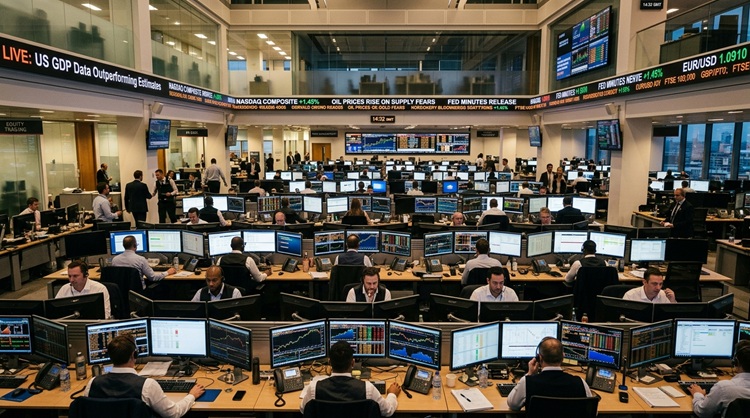

A trader might sit down on Monday and feel like the market is moving in a calm and organised way. Charts appear easier to follow, price movement seems steady, and decisions feel relatively comfortable.
Two days later, that same trader opens the same platform, looks at the same currency pair, and suddenly everything feels different. Prices move faster, reactions seem sharper, and the overall experience feels more intense.
At first, people often think they are doing something wrong.
They wonder whether they missed important information or whether their strategy suddenly stopped working.
Sometimes the answer is much simpler.
The market itself may simply be behaving differently.
For people involved in forex, market volatility often changes not only price movement but also the overall feeling of the trading experience.
Picture the Difference Between Calm Water and Strong Waves
Imagine standing beside the sea.
On some days the water looks calm and predictable. Small waves move steadily toward the shore, making it easier to observe what is happening around you.
On other days strong winds arrive and the sea becomes rough. Waves become larger, movement feels less predictable, and the environment itself suddenly feels more active.
The ocean did not become a different place.
The conditions changed.
Market volatility can create similar effects.
Some periods naturally produce smoother movement, while others create stronger and faster changes in price behaviour.
Volatility Does Not Always Mean Something Negative
Many beginners hear the word volatility and immediately connect it with danger or instability.
The reality is usually more balanced.
Volatility simply describes changes in market movement and activity levels. It does not automatically mean that markets become good or bad.
Higher volatility may create:
- Larger price movement
- Faster market reactions
- Stronger short term changes
- Increased activity levels
- More visible market momentum
Lower volatility may create slower conditions and more gradual movement.
Both environments can feel very different even when traders are observing the same currency pair.
For people involved in forex, recognising this difference often becomes useful because market conditions can influence the way opportunities appear.
Traders Feel the Effects Too
Volatility does not only affect charts.
It often affects people as well.
When prices move rapidly, emotional reactions can sometimes become stronger. Faster movement may create excitement, urgency, or hesitation because information seems to change quickly.
Imagine walking through a quiet street compared with walking through a crowded train station during rush hour.
The surroundings naturally create different reactions.
Trading environments can produce similar experiences.
Some traders feel comfortable during active conditions because they enjoy faster movement. Others prefer quieter periods where decisions feel less rushed.
Neither preference is automatically right or wrong.
The important point is understanding that market conditions can influence both price behaviour and personal behaviour.
Different Conditions Can Change Decision Making
One interesting lesson many traders eventually learn is that markets do not provide identical environments every day.
Beginners sometimes expect the same approach to feel identical regardless of conditions.
After more experience, many realise that market behaviour naturally changes.
Instead of asking only, “What is the market doing?” traders may gradually begin asking another question:
“What type of market environment am I currently seeing?”
That shift often creates a wider perspective.
For many people involved in forex, volatility becomes important because it changes more than movement on a chart. It can influence the speed of decisions, emotional responses, and the overall experience of participating in the market itself.